
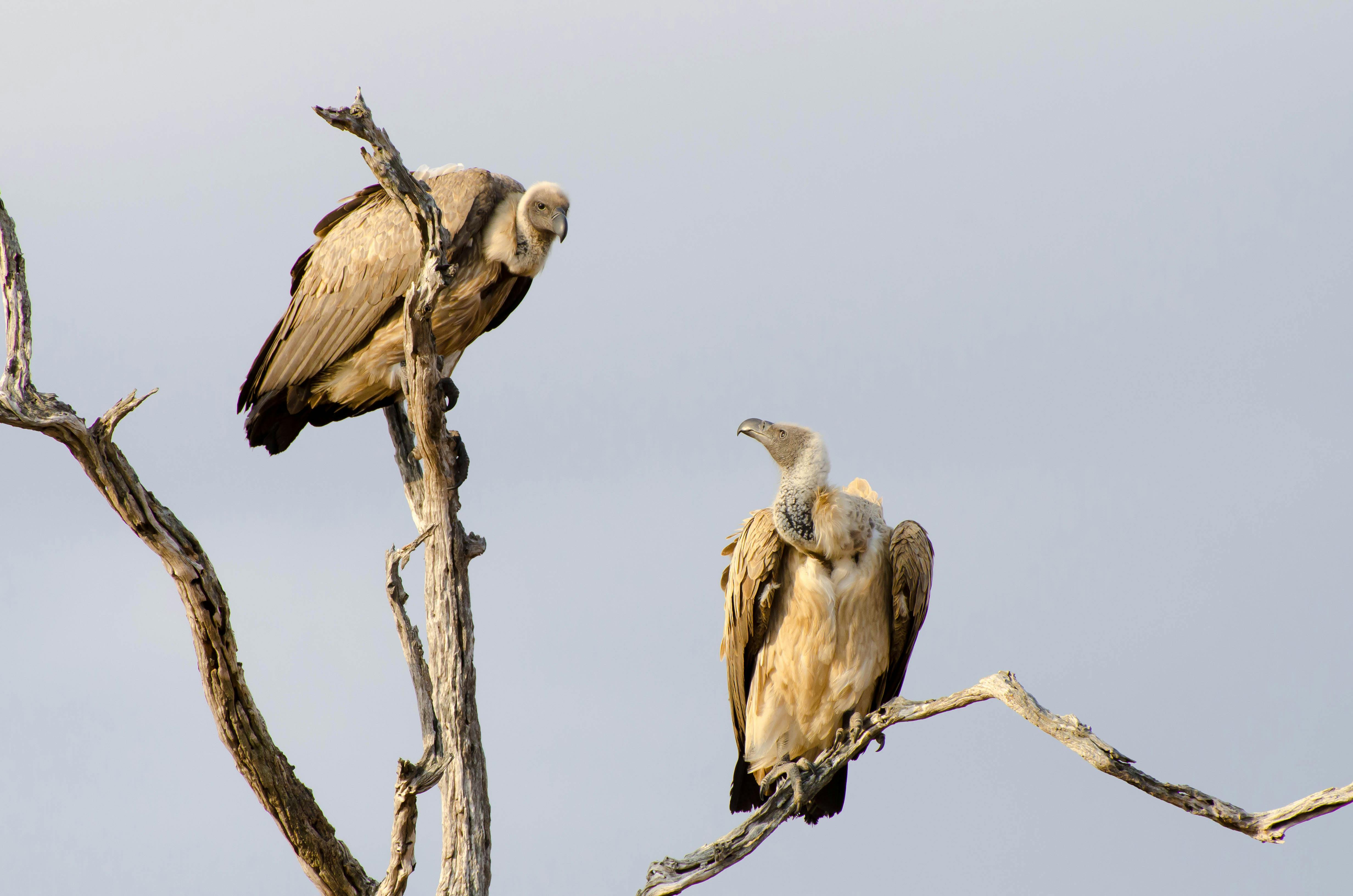
Let's start with vultures. These birds are often associated with scavenging and feeding on carrion, which may not be the most glamorous job, but it is a vital one. Vultures play a crucial role in our ecosystem by consuming animal carcasses that would otherwise rot and potentially spread disease. Without vultures, we could see an increase in disease transmission and a buildup of decaying organic matter, which could have serious consequences for both humans and other wildlife.
In addition to their important ecological role, vultures are fascinating birds in their own right. There are over 20 species of vultures, and they come in a range of sizes and colors. Some, like the bearded vulture, have a wingspan of over nine feet and are known for their distinctive feathered necks. Others, like the palm-nut vulture, feed primarily on fruit and nuts.

Now, let's move on to owls. These birds are often associated with darkness and mystery, and their ability to fly silently and see in the dark has earned them a reputation as skilled predators. While it's true that owls are formidable hunters, they are not the ruthless killers that they are sometimes made out to be.
For starters, owls are important pest controllers. Many species of owls feed on rodents and other small animals that can damage crops and spread disease. By keeping these populations in check, owls help to maintain a healthy ecosystem.
Owls are also fascinating creatures from a biological standpoint. They are able to turn their heads up to 270 degrees, which allows them to see in almost every direction without moving their bodies. Their large eyes are adapted to low light conditions, and they are able to detect even the slightest movement from their prey. Additionally, many species of owls are able to fly almost silently, thanks to special adaptations in their feathers that reduce noise.
Vultures and owls are not "bad" birds. While they may have a spooky appearance and association with death and darkness, they play important ecological roles and are fascinating creatures in their own right. By understanding and appreciating these birds, we can develop a greater appreciation for the complexity and beauty of our natural world.
20 Species of Vultures in the World

There are over 20 species of vultures in the world, and they can be divided into two main groups: Old World vultures and New World vultures.
Old World vultures are found in Europe, Asia, and Africa, and they are more closely related to hawks and eagles than to New World vultures. Some examples of Old World vultures include:
- Eurasian griffon vulture (Gyps fulvus)
- Bearded vulture (Gypaetus barbatus)
- Egyptian vulture (Neophron percnopterus)
- White-backed vulture (Gyps africanus)
- Cinereous vulture (Aegyptius monkus)
- Himalayan griffon vulture (Gyps himalayensis)
- Rüppell's vulture (Gyps rueppellii)
- Lappet-faced vulture (Torgos tracheliotos)
- Cape vulture (Gyps coprotheres)
- Red-headed vulture (Sarcogyps calvus)

New World vultures are found in the Americas, and they are more closely related to storks than to Old World vultures. Some examples of New World vultures include:
- Turkey vulture (Cathartes aura)
- Andean condor (Vultur gryphus)
- California condor (Gymnogyps californianus)
- King vulture (Sarcoramphus papa)
- Black vulture (Coragyps atratus)
- Lesser yellow-headed vulture (Cathartes burrovianus)
- Greater yellow-headed vulture (Cathartes melambrotus)
- American black vulture (Coragyps atratus)
- Turkey vulture (Cathartes aura)
- Lesser black vulture (Aegolius ridgwayi)
The American black vulture and the turkey vulture are the most common and widespread species of New World vultures. The American black vulture is found in much of South and Central America, as well as in the southern United States. It has dark black plumage and a bald, wrinkled head. The turkey vulture also found in South and Central America, as well as in the United States and Canada, has a distinctive red head and a dark brown body.
The lesser yellow-headed vulture and the greater yellow-headed vulture are both found in Central and South America. They have yellow featherless heads and necks and are slightly smaller than the turkey vulture. The lesser black vulture is a smaller species found in Central and South America and is often mistaken for a raptor due to its pointed wings and tail.
All New World vultures are protected under the Migratory Bird Treaty Act in the United States, due to their important ecological roles in the ecosystem.
Both Old World and New World vultures play important roles in their respective ecosystems by scavenging on carrion and helping to prevent the spread of disease.
Why are Vultures Bad, Evil, and Eagles Are Good, Honorable in Cartoons
Vultures and eagles have long been portrayed in cartoons and other media as vastly different characters, with eagles being noble and honorable and vultures being portrayed as bad and evil. But why is this the case? And is it accurate?
First, let's take a look at vultures. Vultures are scavenger birds, which means that they feed on the carcasses of dead animals. In cartoons, they are often depicted as dark, ominous creatures with sharp beaks and claws. This portrayal may be due in part to the fact that vultures are associated with death and decay, which can be unsettling for many people. Additionally, their scavenging behavior can be seen as unclean or unsavory.
But is this portrayal of vultures fair? While it's true that vultures are not the most glamorous of birds, they serve an important role in the ecosystem by cleaning up dead animal remains. Without vultures, carcasses would pile up and become breeding grounds for disease and parasites. In some cultures, vultures are even revered as symbols of purification and renewal.
Now, let's turn our attention to eagles. In cartoons, eagles are often depicted as strong and noble creatures, soaring through the sky with grace and power. They are often associated with freedom, bravery, and patriotism. This portrayal may be due in part to the fact that eagles are apex predators, meaning that they are at the top of the food chain and have no natural predators themselves. Their hunting behavior can be seen as majestic and awe-inspiring.
But is this portrayal of eagles accurate? While eagles are certainly impressive birds, they are not always honorable or good. In fact, eagles are known for their aggressive behavior, often attacking and killing other birds and animals for food or territory. They have even been known to attack humans in rare cases.
So why are vultures bad and eagles good in cartoons? It may be due in part to the fact that these characterizations are based on cultural stereotypes and biases. Vultures are associated with death and decay, which are often seen as negative, while eagles are associated with strength and power, which are often seen as positive. Additionally, vultures are often portrayed as villains or henchmen, while eagles are often portrayed as heroes or symbols of good.
The portrayal of vultures as bad and eagles as good in cartoons is not necessarily accurate or fair. While vultures may not be the most glamorous of birds, they serve an important role in the ecosystem and should not be demonized. Similarly, while eagles are certainly impressive birds, they are not always honorable or good and should not be idealized. It's important to look beyond cultural stereotypes and biases when evaluating the behavior of animals and to appreciate the important roles that all creatures play in the natural world.
Is a Buzzard the Same Bird as a Vulture?
No, a buzzard is not the same bird as a vulture. While both birds are birds of prey and share some similarities, they belong to different families and have distinct physical characteristics and behaviors.
Buzzards are members of the Buteo family, which includes hawks, eagles, and other birds of prey. They have broad wings and a short, hooked beak. Buzzards are found in many parts of the world, including Europe, Asia, and North America.
Vultures, on the other hand, are members of the Accipitridae family, which includes eagles, hawks, kites, and harriers. They have a bald head, and a long, hooked beak, and are usually larger than buzzards. Vultures are known for their scavenging behavior, feeding on the carcasses of dead animals.
In addition to their physical differences, buzzards, and vultures also have different hunting and feeding behaviors. Buzzards are more active hunters, preying on small mammals, birds, and reptiles, while vultures are scavengers, feeding on the remains of dead animals.
Another difference between buzzards and vultures is their habitat. Buzzards are found in a wide range of habitats, including forests, grasslands, and wetlands. Vultures, on the other hand, are more commonly found in open areas, such as deserts and savannas.
In terms of their conservation status, both buzzards and vultures face threats from habitat loss and degradation, as well as from hunting and poisoning. Some species of vultures are critically endangered due to the use of pesticides and other chemicals that have contaminated their food sources.
In summary, while buzzards and vultures share some similarities as birds of prey, they are different species with distinct physical characteristics, behaviors, and habitats.
How are Condors and Vultures Different and Alike? Are there Different Names For One Bird?
Condors and vultures share some similarities, but there are also significant differences between the two birds.
Similarities:
- Both are large birds of prey that feed primarily on carrion (dead animals).
- They have bald heads and necks, which helps to keep them clean while feeding on messy carcasses.
- They are both part of the order Cathartiformes, which is a group of birds that includes the New World vultures.
Differences:
- Condors are generally larger than vultures, with wingspans that can exceed 10 feet (3 meters) in some cases.
- Vultures are found on every continent except for Australia and Antarctica, while condors are limited to South America and California and Arizona in the United States.
- Condors are more specialized in their diet, feeding almost exclusively on large mammal carcasses, while vultures will eat a wider variety of carrion, including fish and reptiles.
- The beaks of condors are more powerful and hooked, allowing them to tear through the tough hides of larger animals, while vultures have weaker, straighter beaks that are better suited for picking apart smaller carcasses.
As for different names, there are many different species of vultures and condors, each with its own unique name. Some examples of vultures include the turkey vulture, black vulture, and Egyptian vulture. Some examples of condors include the Andean condor, California condor, and King vulture (which is not actually a true vulture but is sometimes referred to as one).
In What Ways Are Turkey Vultures Different from Other Vultures?
Turkey vultures (Cathartes aura) are a species of New World vultures that can be distinguished from other vultures in several ways:
Appearance: Turkey vultures have a distinct appearance with dark feathers, a featherless red head, and a long, hooked beak. They are also larger than most other vultures in their range.
Flight: Turkey vultures have a unique flight pattern compared to other vultures. They soar with their wings in a shallow V-shape, and they often teeter back and forth while flying. Their wings are held horizontally in a "V" shape while soaring, whereas other vultures hold their wings straight out when soaring.
Sense of Smell: Turkey vultures have a highly developed sense of smell that allows them to detect carrion from far distances. This is unlike other vultures, which typically locate carrion visually.
Geographic Range: Turkey vultures are found only in the Americas, whereas other vultures are found in other parts of the world.
Diet: Turkey vultures have a broader diet than other vultures. They not only consume carrion but also eat fruits, insects, and other invertebrates.
Social Behavior: Turkey vultures are known for their social behavior, often roosting and flying in groups. In contrast, other vultures tend to be more solitary.
Nesting Habits: Turkey vultures build their nests on the ground, in caves, or in the hollows of trees, whereas other vultures nest in trees or on cliffs.
Conservation Status: Turkey vultures are listed as a species of "Least Concern" by the International Union for Conservation of Nature (IUCN), whereas some other vulture species are considered endangered due to habitat loss and hunting.
Turkey vultures are unique from other vultures in their appearance, flight pattern, sense of smell, geographic range, diet, social behavior, nesting habits, and conservation status. These differences make them fascinating species to observe and study.
How are Vultures Different From Other Birds?
Vultures are a unique group of birds with several distinctive characteristics that set them apart from other birds:
Scavengers: Vultures are primarily scavengers, feeding on carrion (dead animals) that they find on the ground. They have a highly developed sense of smell that allows them to locate decaying flesh from great distances.
Featherless head: Unlike most birds, vultures have a featherless head. This adaptation allows them to feed on carrion without getting their feathers dirty or matted with blood.
Large size: Most vultures are large birds, with wingspans that can reach up to 10 feet. They are also heavier than many other birds, which allows them to soar effortlessly for long periods of time.
Sociable: Vultures are typically social birds, often feeding and roosting in large groups. They also have a unique social hierarchy, with dominant birds getting the first pick of the carrion.
Immune to disease: Vultures have a highly acidic stomach that allows them to digest the bacteria and other pathogens that are present in decaying flesh. This makes them immune to many diseases that would be fatal to other animals, including humans.
Specialized beak: Vultures have a specialized hooked beak that allows them to tear through tough skin and muscle to get to the meat of their prey. Their beaks are also strong enough to break through bones, allowing them to access the nutritious marrow inside.
Excellent eyesight: While vultures are often associated with their sense of smell, they also have excellent eyesight. Their eyes are positioned on the sides of their heads, giving them a wide field of vision that allows them to spot carrion from high in the sky.
Soaring ability: Vultures are masters of soaring flight, and they can stay aloft for hours without flapping their wings. They use thermal updrafts to gain altitude, and they can soar at incredible heights, sometimes reaching altitudes of over 20,000 feet.
Slow metabolism: Vultures have a slow metabolism, which allows them to survive for long periods of time without eating. This adaptation helps them to cope with periods of food scarcity, which are common in many of the environments where they live.
Adaptability: Vultures are found on every continent except Antarctica, and they are able to thrive in a wide variety of habitats, from deserts to rainforests. They are also able to feed on a wide range of carrion, from small rodents to large mammals.
Vultures are a unique group of birds that have evolved a range of specialized adaptations that allow them to thrive as scavengers. Their ability to digest carrion and their excellent sense of smell make them important contributors to many ecosystems, helping to keep them clean and free of decaying flesh.
how much can an andean condor lift, andean condor carry weight, how long can a tenant be left without water in california, how much weight can an andean condor carry, andean condor, how much weight can a condor carry, how far can you hear a train horn, how much can a condor carry, how much can a condor lift, how much weight can a california condor carry, how much can a andean condor carry, american eagle age range, andean condor weight, condor bird, how heavy is a condor, condor, how much can a california condor lift, condor vulture, is american eagle for adults, condor flight speed, andean condor size, american eagle age requirement, american eagle age, condor weight, what age is american eagle for, andean condor wingspan, peruvian condor, andean condor facts, condor bird size, how big is a condor, how much does a condor weigh, andean condor diet, condor bird weight, how much does an andean condor weight, how much do condors weigh, giant condor, how much weight can a vulture carry, andean condor height, how much weight can an albatross carry, eagle age, american eagle age limit, american eagle age demographic, condor carry on weight, andes condor, what do andean condors eat, weight of a condor, american eagle target age, andean condor size comparison, giant condor size, how old to work at american eagle, what do condors eat, size of a condor, andean condor lifespan, condor andino, chilean condor, south american condor, commodore bird, andean condor tattoo, wingspan of andean condor, andean condor hunting, biggest condor bird, american eagle age group, condor de los andes, california condor weight, condors, andean condor mass, condor bird wingspan, what bird can carry the most weight, condor wingspan in feet, biggest bird in the world, how much weight can vultures carry, weight of andean condor, andes condor size, how tall is a condor, american eagle lifespan, how many andean condors are left in the world, condor eagle, the andean condor, how much weight can a vulture lift, wingspan andean condor, biggest condor in the world, age of eagle, colombian condor, andean vulture, condor pajaro, is a condor bigger than an albatross, condors bird, how big is an andean condor, does condor weigh carry on, size of a condor bird, how big is the condor, giant condor wingspan, best rocker recliner chair, what is american eagle known for, american eagle demographic, condor biggest bird, american eagle for adults, how much weight can a bird carry, weight of condor, where does the andean condor live, andean condor next to human, condor andes, condor animal, andean condors, condor carry on size, how big is a condor's wingspan, andean condor feet, largest bird in the world, indian condor, vultur gryphus, can a condor pick up a human, how far can trains be heard, how heavy are condors, ecuadorian condor, andean condor height in feet, wingspan of a condor, eagles induction attire, condor eagle size, are andean condors dangerous, condor in english, biggest condor ever, andean bird, age of an eagle, how much weight can a eagle carry, how much weight can an eagle lift, how high can an andean condor fly, can a condor carry a human, andian condor, andes bird, condor argentina, condor facts, condor of the andes, ecuador condor, vulture condor, andean condor speed, concorde bird, how big are andean condors, condor andino size, condor ecuador, largest andean condor, are andean condor endangered, andean condor pictures, candor bird, condor city, condors meaning, andean condor symbolism, condor pics, andean condor bird size, what is a condor bird, andean condor egg size, andean condor largest flying bird in the world, biggest bird of world, american eagle demographics, size of andean condor, andean condor wingspan in feet, what bird can lift the most weight, how big are condors, peruvian condor size
how much weight can an andean condor carry, andean condor carry weight, how much can an andean condor lift, andean condor, condor bird, andean condor largest flying bird in the world, condor, andean condor size, andean condor wingspan, andean condor tattoo, andean condor height, how much can a andean condor carry, giant condor, andean condor weight, condors, condors bird, peruvian condor, south american condor, andean condor lifespan, andes condor, andes condor size, where does the andean condor live, train horn sound, condor andino, commodore bird, how tall is a condor, andean bird, wowlazy, condor wingspan, condor andino size, how big is an andean condor, largest andean condor, wingspan of andean condor, are andean condor endangered, candor bird, condors meaning, andean condor symbolism, what is a condor bird, milwaukee train horn, andean condor feathers, condor vulture, condor andes, andean condors, condor animal, peru condor, que es un condor, shotgun damage, andean condor compared to human, how much weight can a bird carry, the giant andean condor, how high can an andean condor fly, wingspan of a condor, andean condor pictures, how big are condors, best recliner for over weight heavy person, how much weight can bald eagle carry, heaviest weight a bird can lift, how heavy is a condor, size of andean condor, what is the wingspan of a condor, andean condor bird size, andean condor eat, andean condor speed, andean condor what do they eat, condor bird size, andean condor endangered, andean condor wingspan in feet, how much can golden eagles carry, how much does an andean condor weigh, how much weight can a bald eagle fly with, how much weight can a vulture lift, what do andean condors eat, what do condors eat, what is the heaviest weight a bird can lift, where do andean condors live, condor vulture size, how big are andean condors, wingspan andean condor, is condor a vulture, what is the wingspan of an andean condor, andean condor 中文, andean condor drawing, train horn sounds, andean condor chick, condor bird in spanish, condor videos, train horn blaring, andean condor feather, andean condor habitat, how big is the wingspan of a condor, condor pics, how much weight can a california condor carry, how to make a milwaukee train horn, largest vulture wingspan, condor bird baby, largest flying bird andean condor next to human, what does the andean condor symbolize, andean vulture, andran condor, train horn soundboard, andean conor, conder bird, condor ecuador, vultures and condors, andean condor mythology, andean condor tattoo meaning, andean condor vulture, andean condour, el condor andino, condor pajaro, ecuadorian condor, vultures vs condors, what is a commodore bird, teratorn, the andean condor, are andean condors dangerous, thunderbird argentavis magnificens, south american vulture, best recliner for heavy person, andean condor size comparison, condor in english, condors in peru, el condor peru, peruvian condors


